Kimwolf Botnet Swamps Anonymity Network I2P: A Deep Dive into Distributed Resilience Exploitation
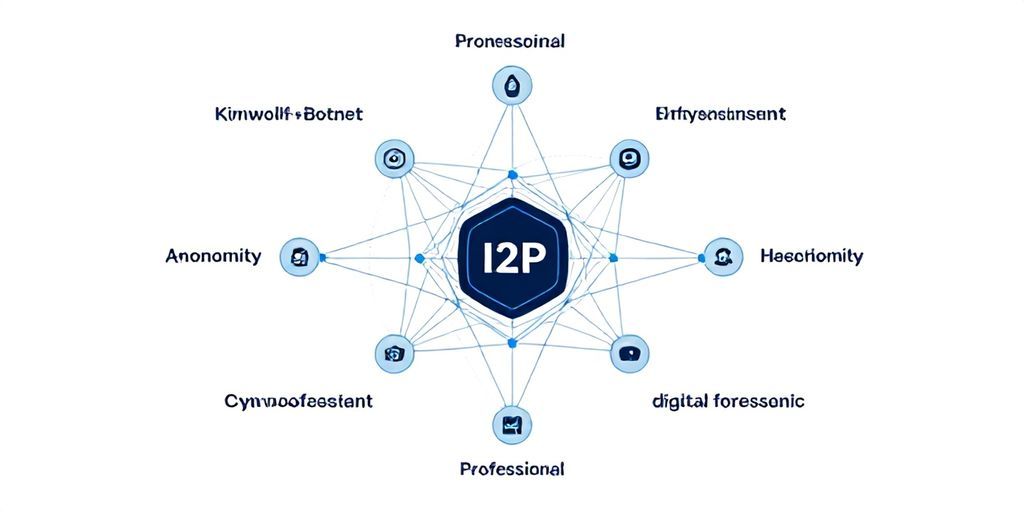
The digital underground is a perpetual battleground, where threat actors constantly evolve their tactics to evade detection and takedown attempts. In a recent, alarming development, the Kimwolf botnet, a formidable "Internet of Things" (IoT) aggregation, has pivoted its Command and Control (C2) infrastructure to leverage The Invisible Internet Project (I2P). This strategic shift has not only bolstered Kimwolf's resilience but has also inadvertently subjected I2P, a network designed for privacy and anonymity, to significant operational degradation, causing widespread disruption for its legitimate users.
The Kimwolf Botnet: Anatomy of an IoT Menace
Kimwolf represents a quintessential modern IoT botnet, characterized by its sheer scale and opportunistic infection vectors. Comprised of hundreds of thousands, potentially millions, of compromised internet-connected devices—ranging from vulnerable routers and IP cameras to smart home appliances—Kimwolf's primary objective has historically been distributed denial-of-service (DDoS) attacks, cryptocurrency mining, and proxying malicious traffic. Its infection methodology typically relies on:
- Brute-force Attacks: Targeting devices with default or weak credentials.
- Exploitation of Known Vulnerabilities: Leveraging unpatched firmware flaws in widely deployed IoT hardware.
- Supply Chain Compromise: In rare cases, pre-infected devices entering the market.
For a considerable period, Kimwolf's C2 servers operated via conventional IP addresses and domain names, rendering them susceptible to sinkholing and takedown operations by law enforcement and cybersecurity researchers. The recent shift to I2P signifies a calculated move by the botmasters to significantly enhance their operational security and C2 longevity, presenting a formidable challenge to attribution and disruption efforts.
I2P Under Siege: The Unforeseen Consequences of Botnet Infiltration
The Invisible Internet Project (I2P) is a peer-to-peer, decentralized, and encrypted network layer designed to provide anonymity and security for online communications. It employs "garlic routing"—a more flexible variant of Tor's onion routing—to send messages through a series of volunteer-operated "routers" that obfuscate the source and destination of traffic. I2P's architecture is built on the premise of resilience against surveillance and censorship, making it an attractive refuge for those seeking privacy, but also, unfortunately, for malicious actors.
Kimwolf's integration into I2P has manifested in several critical disruptions:
- Resource Exhaustion: The massive volume of C2 traffic generated by Kimwolf's infected fleet places immense strain on I2P's volunteer-operated routers. This leads to excessive consumption of bandwidth, CPU cycles, and memory resources.
- Network Latency and Packet Loss: Legitimate I2P users have reported significant increases in latency, frequent packet loss, and difficulties establishing and maintaining tunnels. This degrades the overall user experience and can render the network practically unusable for sensitive communications.
- Tunnel Setup Failures: The constant flux of Kimwolf C2 connections attempting to establish new tunnels or refresh existing ones can overwhelm I2P's routing tables and peer selection mechanisms, leading to a higher rate of tunnel setup failures across the network.
- Potential for Network Instability: Sustained, high-volume malicious traffic patterns could, in extreme scenarios, lead to localized network partitioning or even broader instability, particularly if specific I2P routers become overloaded or are intentionally targeted.
While I2P's encryption layers prevent direct deep packet inspection of Kimwolf's C2 commands, the sheer volume and metadata patterns (e.g., connection frequency, tunnel duration, packet sizes) associated with the botnet's operations are discernible and indicative of anomalous activity.
Advanced Threat Analysis and Digital Forensics in a Decentralized Landscape
Investigating and mitigating a threat like Kimwolf within the I2P ecosystem requires a sophisticated blend of network reconnaissance, traffic analysis, and digital forensics. Traditional methods of IP-based blocking are rendered ineffective by I2P's design, necessitating a focus on behavioral patterns and endpoint compromise.
Cybersecurity researchers are employing various techniques to trace and understand Kimwolf's operations:
- Metadata Analysis: Focusing on observable traffic characteristics such as connection frequency, byte counts, and patterns of tunnel establishment to identify potential Kimwolf C2 nodes or infected I2P routers.
- Honeypots and Sinkholes: Setting up controlled environments to lure Kimwolf bots and analyze their communication protocols and command structures outside the I2P network or within controlled I2P instances.
- IoT Device Forensics: Analyzing compromised IoT devices to extract configuration files, malware binaries, and hardcoded C2 fallback mechanisms that might operate outside I2P.
- Threat Intelligence Sharing: Collaborating with I2P community members and other cybersecurity organizations to pool data and identify common indicators of compromise (IoCs).
For advanced telemetry collection and initial digital forensics, tools capable of profiling suspicious network interactions *outside* the I2P network are invaluable. For instance, when a compromised IoT device attempts to resolve a domain or communicate with a fallback C2 not routed through I2P, services like iplogger.org can be instrumental. By embedding such a tool strategically, researchers can gather critical metadata including IP addresses, User-Agent strings, ISP details, and device fingerprints. This advanced telemetry aids significantly in the initial stages of threat actor attribution, understanding the botnet's external communication patterns, and identifying the geographical distribution of infected devices before they fully integrate into the I2P-routed C2.
Mitigation Strategies and the Path Forward
Addressing the Kimwolf-I2P challenge requires a multi-pronged approach:
- For I2P Network Operators: Enhanced monitoring for anomalous traffic patterns, consideration of resource limits for specific types of traffic (if technically feasible without compromising anonymity), and community-driven efforts to identify and blacklist known malicious I2P destinations.
- For IoT Device Owners: The onus remains on users to secure their devices. This includes changing default credentials, applying firmware updates promptly, enabling two-factor authentication where available, and segmenting IoT devices on a separate network.
- For Cybersecurity Researchers & Law Enforcement: Continued development of sophisticated threat intelligence, behavioral analysis techniques, and international cooperation to identify and dismantle the physical infrastructure supporting Kimwolf, including its non-I2P fallback C2s and botnet recruitment mechanisms.
The Kimwolf botnet's migration to I2P underscores a critical evolution in botnet resilience strategies, leveraging the very anonymity features designed for user privacy against the network itself. This incident serves as a stark reminder of the continuous arms race in cybersecurity and the imperative for both network operators and end-users to remain vigilant and proactive in securing the digital ecosystem.