Introduction: The Persistent Threat of Phishing
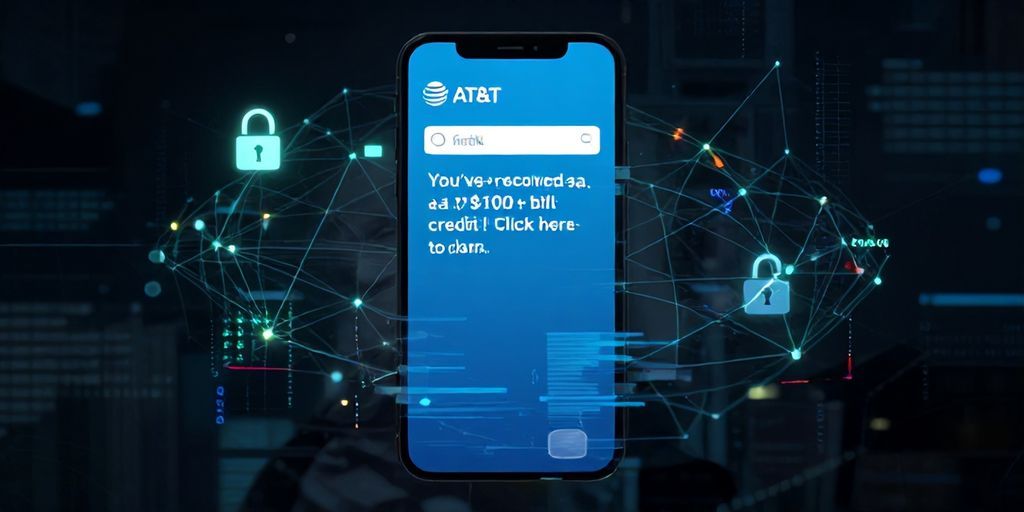
In the evolving landscape of cyber threats, phishing remains a formidable and ever-present danger. While email phishing has long been a staple tactic for threat actors, the rise of mobile communication has ushered in an equally perilous variant: smishing, or SMS phishing. These attacks leverage the ubiquity and perceived trustworthiness of text messages to trick recipients into compromising their personal information. Recently, our team uncovered a particularly sophisticated and realistic multi-layered data theft phishing campaign specifically targeting AT&T customers, designed to extract a broad spectrum of personal and financial details.
Anatomy of the AT&T Rewards Phishing Campaign
Initial Lure: The Irresistible Reward Text
The campaign typically commences with an unsolicited text message delivered to the victim's mobile device. These messages are meticulously crafted to appear legitimate and create a sense of urgency or an enticing offer. Common examples include notifications about "bill credits," "loyalty rewards," "package delivery issues," or "account adjustments." The language often implies a limited-time opportunity, prompting immediate action. For instance, a message might read: "AT&T Free Msg: You've been chosen to receive a $100 bill credit! Verify your account here: [shortened URL]." The embedded URL, often disguised using URL shorteners, is the gateway to the next stage of the attack.
The Deceptive Landing Page: A Masterpiece of Mimicry
Upon clicking the malicious link, victims are redirected to a phishing website designed with astounding fidelity to AT&T's official branding. These pages meticulously replicate AT&T's logos, color schemes, fonts, and overall layout, making it exceedingly difficult for an unsuspecting user to differentiate them from the legitimate site. Threat actors achieve this through various techniques, including domain squatting, typosquatting (e.g., att-rewards.com instead of att.com/rewards), or using complex subdomains to obscure the true origin. The initial page typically requests basic account information, such as an AT&T account number and PIN or a login ID and password, under the guise of "verification" to claim the purported reward.
The Multi-Layered Data Extraction Strategy
What sets this particular campaign apart is its multi-layered approach to data theft, moving beyond a single form submission. Once the initial login credentials are provided, instead of simply redirecting or showing an error, the phishing site progresses through several stages, each designed to extract increasingly sensitive Personally Identifiable Information (PII) and financial data. This progressive disclosure strategy is highly effective because users, having already committed to the initial step, are more likely to continue, believing they are genuinely completing a transaction or verification process.
- Phase 1: Account & Basic PII Collection: After initial login, the site might request confirmation of name, address, email, and phone number, ostensibly to "update profile details" for the reward.
- Phase 2: Deep PII & Security Questions: The next stage often seeks highly sensitive information critical for identity theft. This includes full Social Security Number (SSN), Date of Birth (DOB), mother's maiden name, driver's license number, or answers to common security questions. These details are invaluable for opening new accounts, taking over existing ones, or committing various forms of fraud.
- Phase 3: Financial Credential Harvesting: Finally, to "process the reward" or "verify eligibility," the site demands credit card details, including the card number, expiration date, and Card Verification Value (CVV), or bank account information. This directly facilitates financial theft.
Each phase is presented as a necessary step, building trust and commitment, making it harder for the victim to disengage.
Attacker Reconnaissance: Leveraging IP Loggers
Before even reaching the primary phishing site, victims are often redirected through intermediate pages or tracking links. Threat actors frequently employ services akin to iplogger.org to gather initial reconnaissance on potential targets. This allows them to collect the user's IP address, geographic location, device type, and browser details. Such information can be used to refine subsequent attacks, confirm the target's validity, or even to serve region-specific phishing content, making the overall campaign more effective and personalized. This initial data collection adds another layer of sophistication, enabling attackers to better profile their victims.
The Grave Consequences of Compromise
Falling victim to such a sophisticated phishing attack can have devastating long-term consequences. The stolen data can be used for:
- Identity Theft: With SSN, DOB, and other PII, criminals can open new lines of credit, apply for loans, or file fraudulent tax returns in the victim's name.
- Financial Fraud: Direct access to bank accounts or credit card details leads to immediate financial losses.
- Account Takeover: Compromised AT&T credentials can lead to unauthorized access to communication services, potentially facilitating further social engineering attempts or SIM-swapping attacks.
- Data Breaches on Other Services: If victims reuse passwords, their compromised AT&T credentials can unlock access to numerous other online accounts.
Defending Against Sophisticated Smishing Attacks
Vigilance and a proactive security posture are paramount in combating these threats. Here are critical steps to protect yourself:
Recognizing the Red Flags
- Unexpected Messages: Be suspicious of any unsolicited text message, especially those promising rewards or demanding urgent action.
- Generic Greetings: Legitimate companies typically address you by name. Generic greetings like "Dear Customer" are a red flag.
- Sense of Urgency or Threat: Phishing messages often create fear ("account will be suspended") or excitement ("limited-time offer") to bypass rational thought.
- Suspicious Links: Always scrutinize URLs. Hover over links (on desktop) or long-press (on mobile) to preview the full URL without clicking. Look for discrepancies, extra characters, or unusual domains.
- Requests for Excessive Personal Information: Be wary of requests for SSN, DOB, or full credit card details via text or non-official websites.
Best Practices for Protection
- Verify Directly: If you receive a suspicious message from AT&T (or any company), do not click the link. Instead, navigate to their official website by typing the URL directly into your browser, or use their official mobile app to check for legitimate offers or notifications.
- Enable Multi-Factor Authentication (MFA): MFA adds a critical layer of security, making it significantly harder for attackers to access your accounts even if they steal your password.
- Use Strong, Unique Passwords: Never reuse passwords across different services. A password manager can help manage complex, unique credentials.
- Monitor Financial Statements and Credit Reports: Regularly check your bank and credit card statements for unauthorized activity. Utilize free annual credit reports to detect signs of identity theft.
- Report Phishing Attempts: Forward suspicious texts to AT&T (usually 7726 or SPAM) and report them to relevant authorities.
Conclusion: Vigilance in the Digital Age
The AT&T rewards phishing campaign serves as a stark reminder of the persistent and evolving nature of cyber threats. As threat actors refine their techniques, employing multi-layered data extraction and sophisticated social engineering, user education and proactive security measures become our strongest defenses. By understanding the tactics employed, recognizing red flags, and adopting robust security practices, we can collectively build a more resilient digital environment and safeguard our valuable personal information.