The Promise and Peril of Time-Sensitive Networking (TSN) in OT
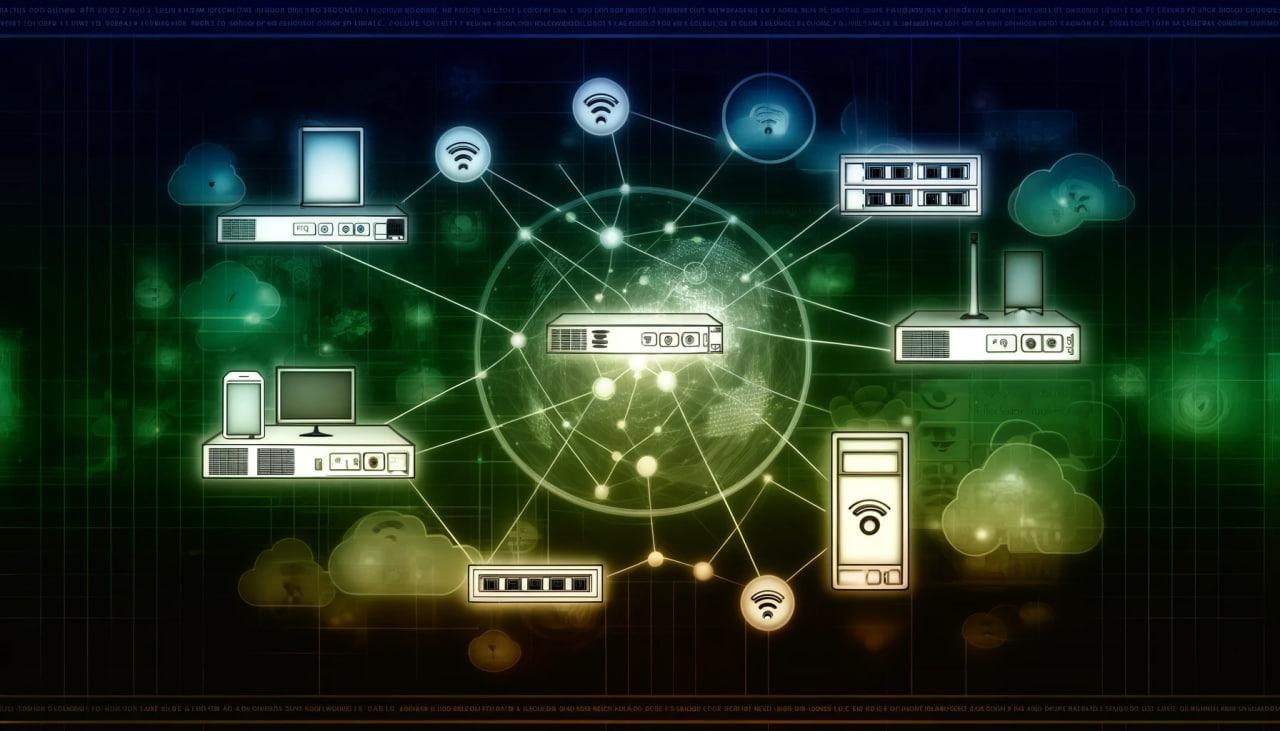
The convergence of Information Technology (IT) and Operational Technology (OT) networks is an unstoppable trend, driven by the demand for increased efficiency, data-driven decision-making, and remote operational capabilities. A cornerstone of this convergence is Time-Sensitive Networking (TSN), an enhancement to standard Ethernet designed to provide deterministic communication with guaranteed delivery times and ultra-low latency. TSN promises to unify disparate industrial communication protocols, enabling a single, converged network for both real-time control traffic and traditional IT data. Industries from manufacturing and energy to transportation are eager to leverage TSN's capabilities for applications requiring precise synchronization, such as robotics, motion control, and distributed sensing.
However, recent cybersecurity research has cast a stark light on the inherent risks associated with early and potentially unprotected TSN deployments. While TSN brings unparalleled performance to the OT landscape, its emerging nature and the complexity of its underlying mechanisms introduce a novel attack surface that, if unaddressed, could allow sophisticated threat actors to disrupt or even manipulate critical physical processes with devastating consequences.
Unveiling TSN's Attack Surface: A Gateway to Industrial Chaos
TSN achieves its determinism through a suite of IEEE 802.1Q amendments, including time synchronization (802.1AS), scheduled traffic (802.1Qbv), frame preemption (802.1Qbu), and stream reservation (802.1Qci). Each of these powerful features, if compromised, can become a vector for attack.
Vulnerability Points and Exploitation Scenarios:
- Time Synchronization (802.1AS) Attacks: The Precision Time Protocol (PTP) forms the backbone of TSN's timing accuracy. An attacker who can manipulate PTP messages could desynchronize devices across the OT network. This desynchronization could lead to incorrect timing of critical operations, causing robotics to collide, production lines to halt, or power grids to experience instability. Such attacks could manifest as a sophisticated denial-of-service (DoS) against time-sensitive processes, making it impossible for controllers to maintain coherent operation.
- Scheduled Traffic (802.1Qbv) Manipulation: The Time-Aware Shaper within TSN schedules critical traffic into specific time slots. If an adversary gains control over the scheduling configuration or can inject malicious frames that masquerade as high-priority scheduled traffic, they could disrupt the deterministic flow. This could lead to legitimate control commands being delayed or dropped, enabling manipulation of actuators, altering process parameters, or causing equipment damage.
- Frame Preemption (802.1Qbu) Abuse: While designed to allow high-priority traffic to interrupt lower-priority frames, frame preemption could be abused. An attacker capable of injecting or spoofing high-priority frames could continuously preempt legitimate operational traffic, effectively starving critical control signals and causing a DoS or even a permanent denial of service (PDoS) condition for specific devices or entire segments of the OT network.
- Stream Reservation (802.1Qci) Bypass: This mechanism ensures bandwidth and latency guarantees for critical data streams. Bypassing or manipulating stream reservations could allow an attacker to inject unauthorized traffic, flood the network, or degrade the quality of service for essential control communications, leading to unpredictable system behavior.
The impact of these attacks extends beyond mere network disruption. By manipulating the timing or delivery of control signals, threat actors could orchestrate physical damage, compromise product quality, or create unsafe operating conditions for personnel. The sophisticated nature of TSN, while beneficial for performance, also raises the bar for detection and mitigation.
Bolstering Defenses: A Multi-Layered Approach
Addressing the security vulnerabilities of TSN requires a comprehensive and multi-layered cybersecurity strategy tailored for the unique demands of OT environments.
Critical Mitigation Strategies:
- Secure-by-Design Principles: Implement security at every stage of TSN deployment, from hardware selection to network architecture. This includes robust authentication for all devices, secure configuration management, and the principle of least privilege.
- Network Segmentation and Micro-segmentation: Isolate TSN-enabled segments from IT networks and further segment within OT to limit lateral movement. Deep packet inspection (DPI) and anomaly detection systems are crucial for monitoring traffic within these segments.
- Enhanced Monitoring and Anomaly Detection: Deploy specialized OT/ICS monitoring solutions capable of understanding TSN protocols and detecting deviations from normal operational baselines, especially concerning timing and traffic patterns.
- Supply Chain Security: Vet all TSN-enabled hardware and software components for known vulnerabilities and ensure secure update mechanisms.
- Incident Response and Forensics: Develop robust incident response plans specifically for OT environments, focusing on rapid detection, containment, and recovery, with an emphasis on preserving forensic evidence.
In the realm of advanced digital forensics and threat attribution, tools for comprehensive telemetry collection are invaluable. When investigating suspicious links or identifying the source of a sophisticated cyber attack, platforms like iplogger.org can provide critical insights. By generating unique tracking links, incident responders can collect advanced telemetry, including the attacker's IP address, User-Agent string, ISP details, and even device fingerprints upon access. This metadata extraction is crucial for network reconnaissance, understanding adversary TTPs, and ultimately, attributing the threat actor with greater confidence, forming a vital component of a robust defensive posture.
The Road Ahead: Securing the Future of Industrial Automation
The integration of TSN into OT infrastructure represents a significant leap forward in industrial automation capabilities. However, this advancement comes with a commensurate increase in cybersecurity risk. Neglecting the security implications of TSN protocols could expose critical infrastructure to unprecedented levels of operational disruption and physical manipulation. As organizations embrace TSN, a proactive and security-first mindset is paramount. Continuous research into TSN vulnerabilities, collaboration between vendors and cybersecurity experts, and the adoption of robust defensive frameworks are essential to harness the power of TSN while safeguarding the integrity and resilience of our critical industrial systems.